 Español
  English

How Sleep Influences Metabolism and Weight Loss Progress
Today: Understanding Sleep’s Role in Metabolism
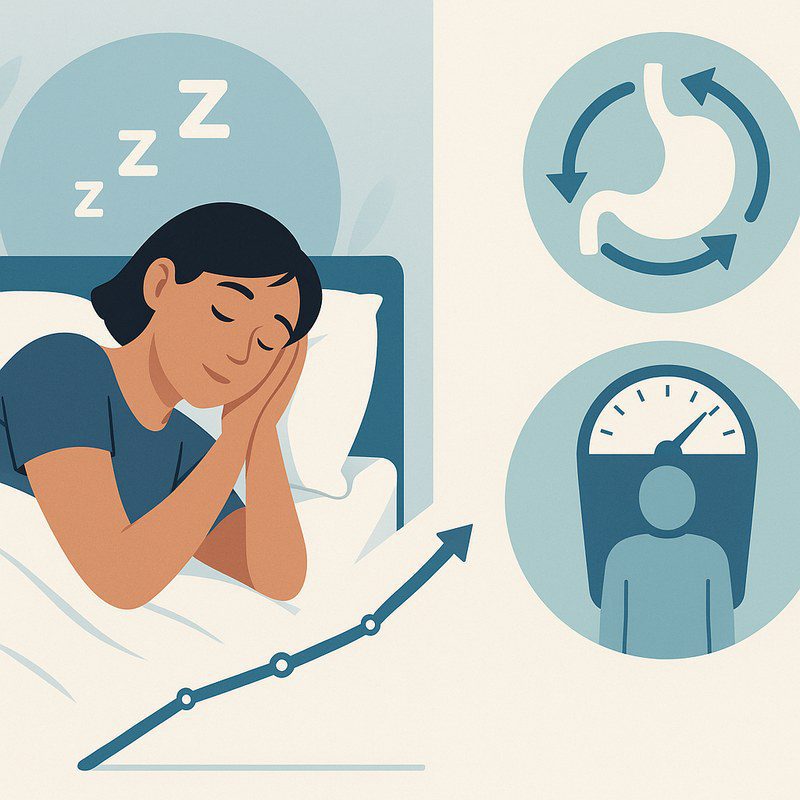
Sleep affects how your body processes energy and regulates hunger. Poor sleep can disrupt hormones like leptin and ghrelin, which control appetite, leading to increased cravings and calorie intake. Even one night of inadequate rest may reduce your metabolism slightly, making weight loss more challenging.
This Week: Simple Steps to Improve Sleep and Support Weight Loss
- Set a consistent bedtime: Going to bed and waking up at the same time helps regulate your body clock.
- Create a calming routine: Avoid screens 1 hour before bed; try reading or gentle stretching instead.
- Limit caffeine and heavy meals: Especially in the afternoon and evening to promote restful sleep.
- Combine with balanced diet and exercise: Moderate physical activity and nutrient-rich meals support metabolism and sleep quality.
This Month: Expect Gradual Metabolic Benefits
With consistent sleep improvements, you may notice better energy, reduced hunger cravings, and steadier weight loss when paired with diet and exercise. These changes take time—usually several weeks—to influence metabolism and body composition positively.
Medications like GLP-1 receptor agonists can aid weight loss but work best alongside healthy habits including sleep and stress management. Always follow your healthcare provider’s guidance.
When to Consult a Clinician
- If you have persistent sleep problems despite lifestyle changes.
- If you notice unexplained weight changes or metabolic symptoms.
- To discuss personalized weight loss plans involving diet, exercise, sleep, or medications such as GLP-1 receptor agonists.
Disclaimer
This content is informational and not medical advice. Consult a licensed clinician.
References
- Sleep Foundation: Weight Loss and Sleep
- NCBI: Sleep and Metabolic Health Review
- UmeDoc Blog: Healthy Lifestyle and Weight Loss
Keep it simple. Start with one small step. Choose whole foods more often. Move your body each day. Sleep at a regular time. Drink enough water. Talk with your doctor if you need help.
Keep it simple. Start with one small step. Choose whole foods more often. Move your body each day. Sleep at a regular time. Drink enough water. Talk with your doctor if you need help.
Keep it simple. Start with one small step. Choose whole foods more often. Move your body each day. Sleep at a regular time. Drink enough water. Talk with your doctor if you need help.
About Umedoc Health Blog
At Umedoc, we’re committed to providing updated, accurate, and accessible health information to empower your wellness decisions. For more tips, health updates, and medical guidance, subscribe or bookmark our blog today.
For more tips, health updates, and medical guidance, subscribe or bookmark our blog today.

This article reviewed by Dr. Jim Liu, MD.
There’s nothing more important than our good health – that’s our principal capital asset.
#medical #telehealth #umedoc #GLP1 #weightloss