 Español
  English

Track Daily Habits to Support Weight Loss Progress
Today: Start Tracking Key Habits
Begin by noting your current daily routines around eating, physical activity, sleep, and stress. For example, record what and when you eat, how much you move, your bedtime and wake time, and moments when you feel stressed. Using a simple notebook or an app can help keep this organized. This awareness is the first step to understanding your lifestyle patterns.
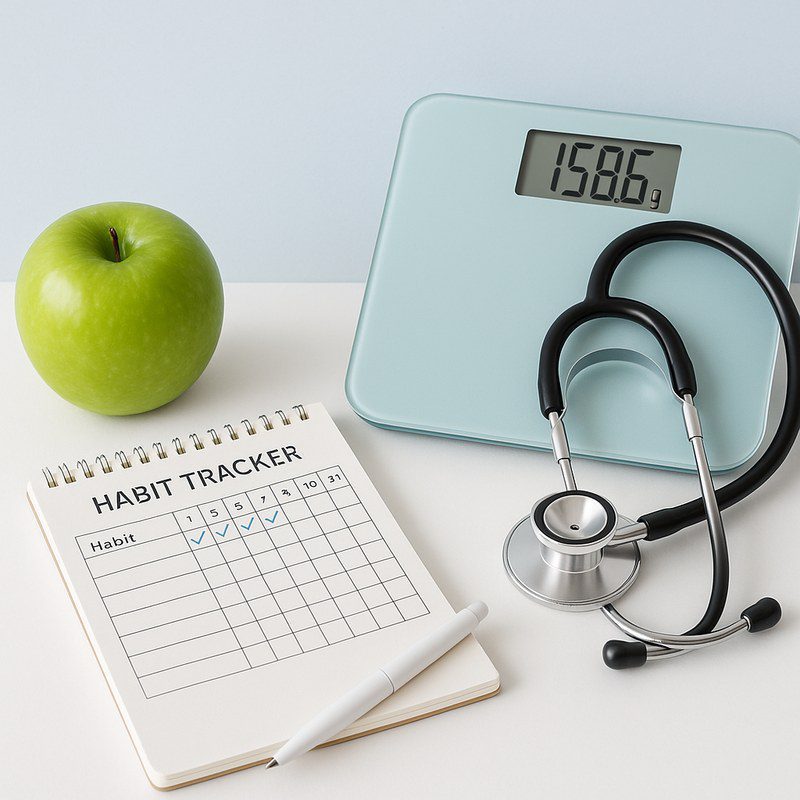
This Week: Create Consistent Tracking and Small Changes
Over the next seven days, continue logging your habits and make small, manageable adjustments. Aim to:
- Diet: Include more vegetables, lean proteins, and whole grains while watching portion sizes.
- Exercise: Add moderate activities, such as brisk walking, totaling about 30 minutes most days.
- Sleep: Set a regular bedtime to achieve 7–9 hours of quality sleep.
- Stress: Try brief relaxation techniques, like deep breathing or mindfulness, to reduce tension.
Tracking helps identify what works and where challenges arise. For practical tips, visit UMEDOC’s blog.
This Month: Expect Gradual Progress and Evaluate
After several weeks of consistent tracking and habit changes, weight loss tends to be gradual, around 1 to 2 pounds per week, which is considered safe by health experts. Maintaining balanced diet, regular exercise, adequate sleep, and stress management is key for sustained results.
If weight loss stalls, consider consulting a healthcare provider to review your approach. Some adults may discuss options like GLP-1 receptor agonists, medications that can support weight loss when combined with lifestyle changes. Always seek professional advice before starting any medication.
When to Consult a Clinician
- If you experience unexpected weight changes or health symptoms.
- If you want personalized guidance on diet, exercise, or medications.
- If stress or sleep issues significantly affect your daily life.
Disclaimer
This content is informational and not medical advice. Consult a licensed clinician.
References
- Centers for Disease Control and Prevention. Losing Weight. Accessed June 2024.
- National Sleep Foundation. Healthy Sleep Tips. Accessed June 2024.
- American Psychological Association. Stress Management. Accessed June 2024.
- Jensen MD, et al. 2014. 2013 AHA/ACC/TOS Guideline for the Management of Overweight and Obesity in Adults. Circulation. 129(25 Suppl 2):S102-38.
Keep it simple. Start with one small step. Choose whole foods more often. Move your body each day. Sleep at a regular time. Drink enough water. Talk with your doctor if you need help.
Keep it simple. Start with one small step. Choose whole foods more often. Move your body each day. Sleep at a regular time. Drink enough water. Talk with your doctor if you need help.
About Umedoc Health Blog
At Umedoc, we’re committed to providing updated, accurate, and accessible health information to empower your wellness decisions. For more tips, health updates, and medical guidance, subscribe or bookmark our blog today.
For more tips, health updates, and medical guidance, subscribe or bookmark our blog today.

This article reviewed by Dr. Jim Liu, MD.
There’s nothing more important than our good health – that’s our principal capital asset.
#medical #telehealth #umedoc #GLP1 #weightloss