 Español
  English

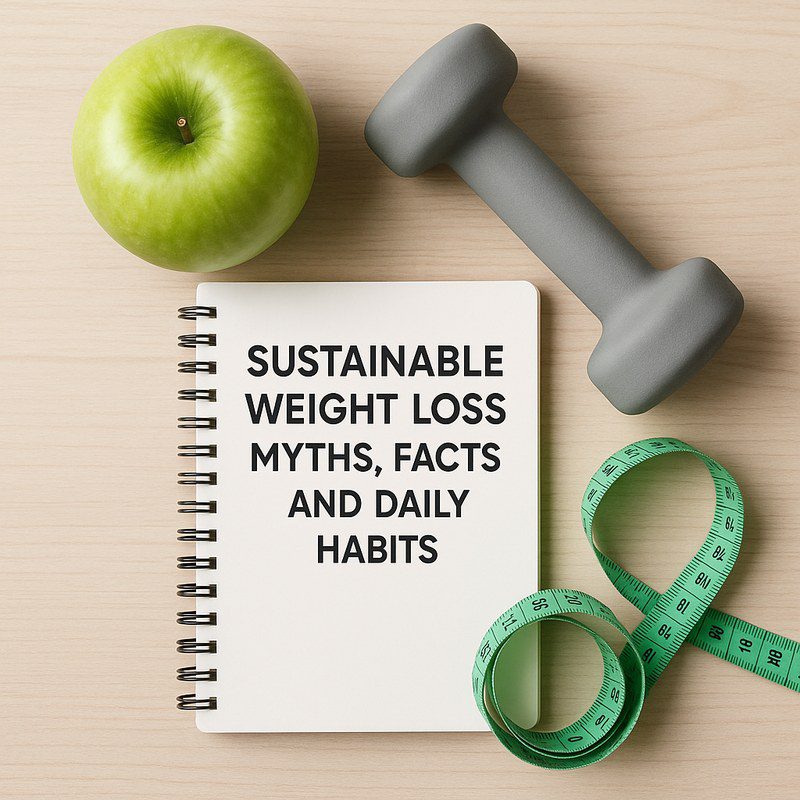
Sustainable Weight Loss: Myths, Facts, and Daily Habits
Myth vs Fact: Understanding Weight Loss
Myth: You must follow fad diets or extreme calorie cuts to lose weight quickly.
Fact: Rapid weight loss methods are often unsustainable and may harm metabolism. Balanced, gradual changes are safer and more effective long-term.
Myth: Exercise alone can lead to significant weight loss without dietary changes.
Fact: Combining healthy eating with regular physical activity is essential for lasting weight loss.
Myth: Sleep and stress have little impact on weight management.
Fact: Poor sleep and high stress can disrupt hormones that regulate hunger and fat storage, making weight loss harder.
What Does the Evidence Say?
Research from organizations such as the National Institute of Diabetes and Digestive and Kidney Diseases (NIDDK) highlights that sustainable weight loss occurs at a rate of 1-2 pounds per week through balanced diet, exercise, and behavioral changes.
Hormones like glucagon-like peptide-1 (GLP-1) play a key role by regulating appetite and metabolism. Diets rich in lean protein, fiber, and healthy fats encourage GLP-1 release, promoting fullness and reducing overeating.
Regular exercise improves metabolic health and insulin sensitivity, while adequate sleep (7-9 hours) and stress management help balance hunger hormones such as ghrelin and leptin.
Actionable Steps for Sustainable Daily Habits
- Plan Balanced Meals: Include lean proteins (chicken, fish, legumes), whole grains, vegetables, and healthy fats (avocado, nuts) to support satiety and steady energy.
- Incorporate Regular Exercise: Aim for at least 150 minutes of moderate aerobic activity weekly, such as brisk walking, cycling, or swimming. Add strength training twice a week to build muscle.
- Prioritize Quality Sleep: Establish a consistent sleep schedule and create a restful environment to get 7-9 hours of sleep nightly.
- Manage Stress Effectively: Practice relaxation techniques like deep breathing, mindfulness, or gentle yoga to reduce cortisol levels that may increase appetite.
- Limit Highly Processed Foods: Reduce intake of foods high in added sugars and unhealthy fats that can interfere with hormones like GLP-1.
- Consult Reliable Resources: For more tips and guidance, visit our healthcare blog regularly.
When to Consult a Clinician
If you experience persistent difficulties with weight management despite lifestyle changes, or if you have medical conditions such as diabetes, heart disease, or hormonal disorders, consult a licensed healthcare professional. They can provide personalized advice and discuss options including medications like GLP-1 receptor agonists when appropriate.
Disclaimer
This content is informational and not medical advice. Consult a licensed clinician.
References
- National Institute of Diabetes and Digestive and Kidney Diseases. Health Information on Adult Overweight and Obesity. Available at: https://www.niddk.nih.gov/health-information/weight-management/adult-overweight-obesity
- Centers for Disease Control and Prevention. Healthy Weight – Losing Weight. Available at: https://www.cdc.gov/healthyweight/losing_weight/index.html
- Harvard T.H. Chan School of Public Health. The Nutrition Source: Healthy Weight. Available at: https://www.hsph.harvard.edu/nutritionsource/healthy-weight/
Keep it simple. Start with one small step. Choose whole foods more often. Move your body each day. Sleep at a regular time. Drink enough water. Talk with your doctor if you need help.
Keep it simple. Start with one small step. Choose whole foods more often. Move your body each day. Sleep at a regular time. Drink enough water. Talk with your doctor if you need help.
Keep it simple. Start with one small step. Choose whole foods more often. Move your body each day. Sleep at a regular time. Drink enough water. Talk with your doctor if you need help.
Keep it simple. Start with one small step. Choose whole foods more often. Move your body each day. Sleep at a regular time. Drink enough water. Talk with your doctor if you need help.
About Umedoc Health Blog
At Umedoc, we’re committed to providing updated, accurate, and accessible health information to empower your wellness decisions. For more tips, health updates, and medical guidance, subscribe or bookmark our blog today.
For more tips, health updates, and medical guidance, subscribe or bookmark our blog today.

This article reviewed by Dr. Jim Liu, MD.
There’s nothing more important than our good health – that’s our principal capital asset.
#medical #telehealth #umedoc #GLP1 #weightloss