 Español
  English

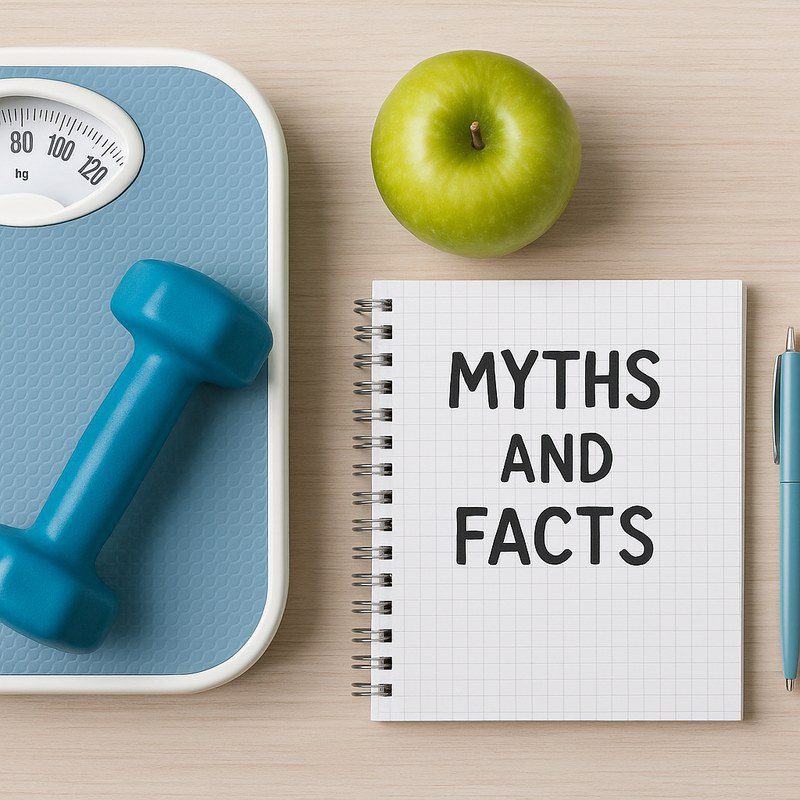
Breaking Through Weight Loss Plateaus: Myths and Facts
Understanding Weight Loss Plateaus: Myth vs Fact
Many adults experience a frustrating pause in weight loss despite their efforts. Let’s explore common myths and the facts behind them.
- Myth: Skipping meals helps break a plateau.
Fact: Skipping meals can reduce metabolism and increase hunger, making weight loss harder. - Myth: You must drastically cut calories to restart weight loss.
Fact: Extreme calorie restriction often backfires by lowering energy and muscle mass. - Myth: Exercise alone will overcome a plateau.
Fact: Exercise is important but must be combined with balanced diet, sleep, and stress management.
What Does the Evidence Say?
Scientific studies show that weight loss plateaus result from the body adapting to lower calorie intake and increased activity, slowing metabolism. For example, research indicates that hormonal changes affect hunger and energy use during prolonged dieting (NIH).
Medications like GLP-1 receptor agonists may assist appetite control, but evidence supports combining them with lifestyle changes for best results. Quality sleep (7–9 hours), regular exercise, balanced diet, and stress reduction are key to overcoming plateaus.
Actionable Steps to Restart Weight Loss
- Review Your Diet: Focus on nutrient-dense foods. Avoid drastic calorie cuts; instead, try small adjustments like reducing sugary beverages or processed snacks.
- Increase Activity Wisely: Add variety to workouts and include strength training to preserve muscle mass, which supports metabolism.
- Prioritize Sleep: Aim for consistent 7–9 hours per night. Poor sleep disrupts hormones that regulate hunger and fullness.
- Manage Stress: Practice relaxation techniques such as deep breathing or mindfulness to reduce stress-related eating.
- Consider Medical Advice: If taking GLP-1 medications or other treatments, work closely with your healthcare provider to optimize your plan.
For more detailed guides on healthy weight loss habits, visit our healthcare blog.
When to Consult a Clinician
If your weight loss plateau lasts several months despite healthy habits, or if you experience unexplained weight changes, fatigue, or other symptoms, seek professional medical advice. A clinician can assess for underlying conditions and recommend personalized strategies.
Disclaimer
This content is informational and not medical advice. Consult a licensed clinician.
References
- Hall KD. What is the required energy deficit per unit weight loss? Int J Obes (Lond). 2008;32(3):573-576. https://www.ncbi.nlm.nih.gov/pmc/articles/PMC3943438/
- National Sleep Foundation. How Sleep Affects Your Weight. https://www.sleepfoundation.org/nutrition/weight-loss-and-sleep
- American Psychological Association. Stress and Weight Gain. https://www.apa.org/news/press/releases/stress/2013/stress-weight-gain
Keep it simple. Start with one small step. Choose whole foods more often. Move your body each day. Sleep at a regular time. Drink enough water. Talk with your doctor if you need help.
Keep it simple. Start with one small step. Choose whole foods more often. Move your body each day. Sleep at a regular time. Drink enough water. Talk with your doctor if you need help.
Keep it simple. Start with one small step. Choose whole foods more often. Move your body each day. Sleep at a regular time. Drink enough water. Talk with your doctor if you need help.
About Umedoc Health Blog
At Umedoc, we’re committed to providing updated, accurate, and accessible health information to empower your wellness decisions. For more tips, health updates, and medical guidance, subscribe or bookmark our blog today.
For more tips, health updates, and medical guidance, subscribe or bookmark our blog today.

This article reviewed by Dr. Jim Liu, MD.
There’s nothing more important than our good health – that’s our principal capital asset.
#medical #telehealth #umedoc #GLP1 #weightloss