 Español
  English

Daily Habits That Support Safe and Lasting Weight Loss
What Daily Habits Help Adults Lose Weight Safely?
Consistent habits like eating balanced meals, moving regularly, sleeping well, and managing stress support weight loss safely. These habits work together to regulate appetite hormones such as GLP-1 and maintain metabolism.
How Does Diet Influence Weight Loss?
Focusing on whole foods with fiber and protein helps control hunger and blood sugar. Avoid extreme calorie cutting, which can slow metabolism and cause nutrient gaps.
Why Is Exercise Important for Weight Loss?
Moderate exercise, like brisk walking or cycling for at least 150 minutes weekly, boosts metabolism and mood. Regular activity supports fat burning and helps maintain muscle.
What Role Does Sleep Play in Weight Management?
Getting 7–9 hours of quality sleep nightly balances hunger hormones and supports energy use. Poor sleep may increase cortisol, a stress hormone linked to fat storage.
How Can Stress Affect Weight Loss?
Chronic stress raises cortisol levels, which can encourage fat storage and increase appetite. Managing stress with relaxation techniques is important for lasting weight control.
At-Home Plan for Sustainable Weight Loss
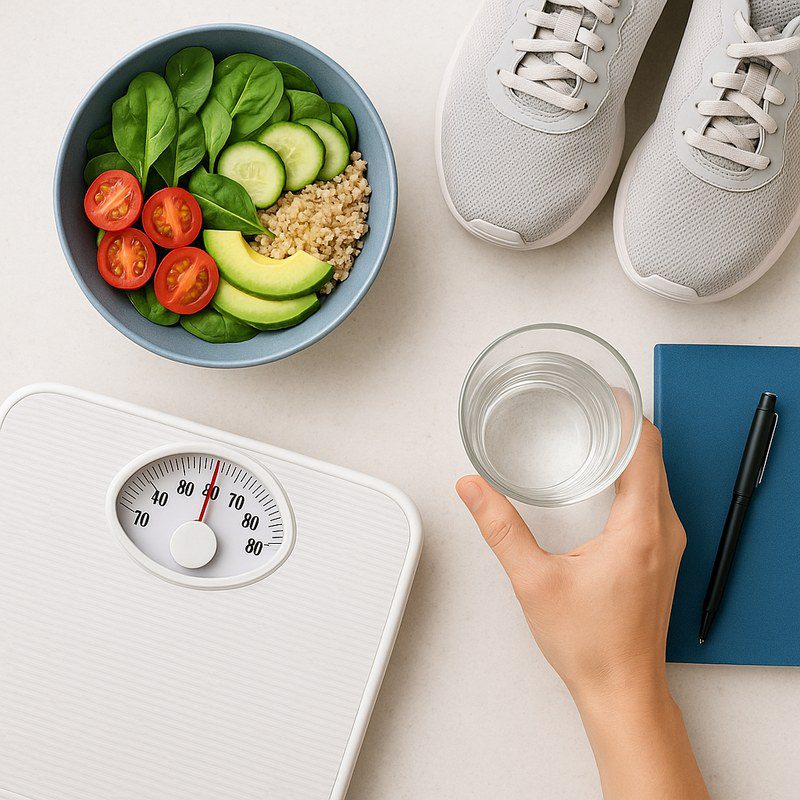
- Eat Balanced Meals: Include vegetables, fruits, lean proteins, and whole grains daily.
- Move Regularly: Aim for 30 minutes of moderate exercise most days.
- Prioritize Sleep: Set a consistent bedtime and limit screen time before bed.
- Manage Stress: Practice mindfulness, deep breathing, or gentle yoga.
- Stay Hydrated: Drink water throughout the day to support metabolism.
- Monitor Progress: Use a journal or app to track habits and adjust as needed.
When to Consult a Clinician
If weight loss is difficult despite healthy habits, or if considering medications like GLP-1 receptor agonists, consult a healthcare provider. Professional guidance ensures safety and personalized support.
Disclaimer
This content is informational and not medical advice. Consult a licensed clinician.
References
- Hall KD, et al. (2016). Energy expenditure and body composition changes during weight loss. Am J Clin Nutr.
- Vilsbøll T, et al. (2012). GLP-1 and appetite regulation. Endocr Rev.
- Spiegel K, et al. (2004). Sleep loss and hormonal changes affecting weight. Ann Intern Med.
- Adam TC, Epel ES. (2007). Stress, eating and the reward system. Physiol Behav.
Learn more about healthy lifestyle habits at UmeDoc Blog and explore evidence-based guidelines from the Centers for Disease Control and Prevention.
Keep it simple. Start with one small step. Choose whole foods more often. Move your body each day. Sleep at a regular time. Drink enough water. Talk with your doctor if you need help.
About Umedoc Health Blog
At Umedoc, we’re committed to providing updated, accurate, and accessible health information to empower your wellness decisions. For more tips, health updates, and medical guidance, subscribe or bookmark our blog today.
For more tips, health updates, and medical guidance, subscribe or bookmark our blog today.

This article reviewed by Dr. Jim Liu, MD.
There’s nothing more important than our good health – that’s our principal capital asset.
#medical #telehealth #umedoc #GLP1 #weightloss