Español
  English

The Retinoid Revolution: A Dermatologist’s Guide to Building a Smarter Skincare Routine
In the world of skincare, few ingredients have earned as much scientific acclaim and consumer praise as retinoids. A powerhouse family of vitamin A derivatives, retinoids are celebrated for their ability to combat acne, reduce the appearance of fine lines and wrinkles, and improve overall skin tone and texture. However, with a dizzying array of options, from over-the-counter creams to prescription-strength gels, navigating the retinoid landscape can be confusing. Understanding what they are and how to use them correctly is the key to unlocking their benefits without the common side effects.
This guide (updated for 2025) will demystify the retinoid family, explain the “retinization” process, and provide a clear, step-by-step approach to incorporating these transformative ingredients into your routine.
Understanding the Retinoid Family: A Hierarchy of Power
Retinoids are all derivatives of Vitamin A. Their effectiveness and potential for irritation are directly related to how many conversion steps they require to become retinoic acid, the active form of the molecule that can be used by skin cells.
- Retinyl Esters (e.g., Retinyl Palmitate): The weakest and most stable form. It requires three conversion steps to become retinoic acid. Ideal for beginners or those with extremely sensitive skin, offering a gentle introduction with minimal irritation.
- Retinol: The most common over-the-counter retinoid. It requires two conversion steps. It is more potent than retinyl esters and is widely used for anti-aging and texture improvement.
- Retinaldehyde (Retinal): The most potent over-the-counter option, requiring only one conversion step. It works faster than retinol but may come with a slightly higher risk of irritation.
- Adapalene: A synthetic retinoid that was once prescription-only but is now available over-the-counter for acne treatment. It’s highly effective and often better tolerated than prescription tretinoin.
- Tretinoin (e.g., Retin-A): A powerful prescription-strength retinoic acid. It is already in its active form and requires no conversion, making it the most potent and effective retinoid for treating signs of aging, acne, and sun damage. It also comes with the highest risk of irritation.
The “Retinization” Process: The Key to Success
When you first start using a retinoid, especially a potent one, your skin may go through a period of adjustment known as “retinization.” This can involve redness, flaking, dryness, and increased sensitivity. It’s not a sign that the product is “bad” or that you should stop, but rather that your skin cells are turning over more rapidly.
Dermatologist Recommendations for Beginners (Start Low and Slow):
- Choose the Right Strength: Start with a low-strength retinol (0.25-0.5%) or a retinyl ester.
- Start Gradually: Apply a pea-sized amount to your entire face just 1-2 times per week for the first few weeks.
- The Sandwich Method: To buffer irritation, apply a moisturizer, then the retinoid, and then another layer of moisturizer.
- Listen to Your Skin: As your skin builds tolerance (typically over 4-6 weeks), you can gradually increase the frequency to every other night, and eventually, nightly. If you experience significant irritation, reduce the frequency.
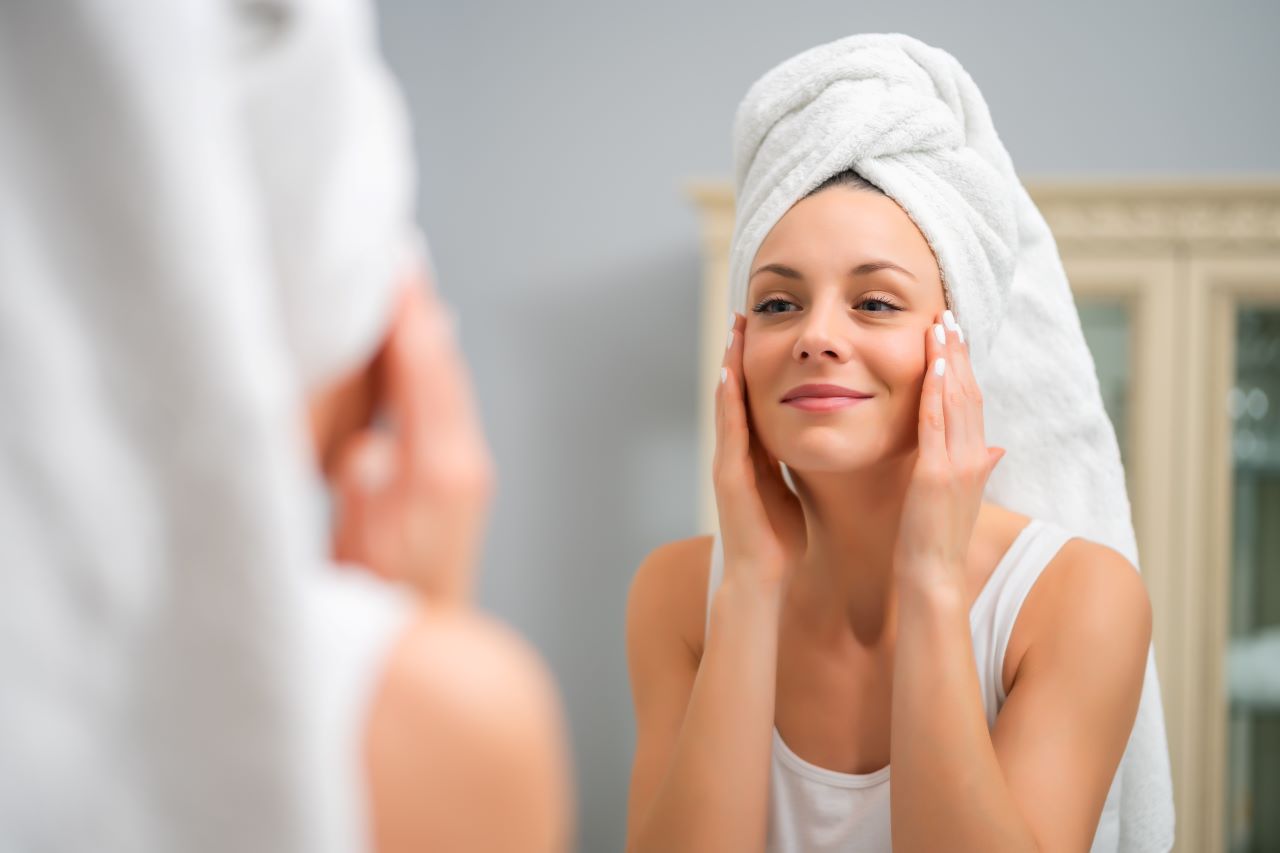
Essential Practices for a Retinoid Routine
Using a retinoid requires a well-rounded skincare routine to protect your skin and maximize benefits.
- Sunscreen is Non-Negotiable: Retinoids make your skin more sensitive to the sun. Always apply a broad-spectrum SPF 30+ sunscreen every morning, regardless of the weather.
- Nighttime Application: Apply retinoids at night as they can be broken down by UV light, making them less effective.
- Use Gentle Products: On nights you use a retinoid, avoid other potentially irritating ingredients like exfoliating acids (AHAs/BHAs) or physical scrubs.
- Moisturize: A good, thick moisturizer is your best friend. It helps to soothe and repair the skin barrier.
- Consistency: The true magic of retinoids is in their long-term, consistent use. You may see initial results with acne in a few weeks, but visible improvements in fine lines and discoloration can take 3-6 months.
Conclusions and Key Takeaways
- Retinoids are a family of vitamin A derivatives, with potency ranging from gentle over-the-counter formulas to prescription-strength tretinoin.
- The “start low and slow” method is crucial for beginners to minimize irritation and allow the skin to adapt.
- Daily sunscreen use is non-negotiable, as retinoids increase sun sensitivity.
- Consistency is the key to unlocking the long-term benefits of retinoids for a wide range of skin concerns, from acne to aging.
Trusted References
Mayo Clinic. www.mayoclinic.org (Search for “retinoids” and “tretinoin.”)
American Academy of Dermatology Association (AAD). www.aad.org (Refer to “Retinoid” resources.)
Journal of the American Academy of Dermatology. (Refer to recent clinical reviews on topical retinoids.)
Dermatology Times. www.dermatologytimes.com (For professional insights and best practices.)
Integrating Wegovy with a healthy diet and lifestyle modifications is crucial for effective and sustainable weight loss. For detailed meal suggestions and guidance, refer to our Wegovy Diet Plan PDF.
About Umedoc Health Blog
At Umedoc, we’re committed to providing updated, accurate, and accessible health information to empower your wellness decisions. For more tips, health updates, and medical guidance, subscribe or bookmark our blog today.

This article reviewed by Dr. Jim Liu, MD.
There’s nothing more important than our good health – that’s our principal capital asset.
#medical #telehealth #umedoc #ecnoglutide #GLP #weight loss #Wegovy #diet