 Español
  English

Overcoming Weight Loss Plateaus: Daily Habits That Help
What Is a Weight Loss Plateau?
A weight loss plateau happens when your weight stays the same for weeks despite your ongoing efforts. It’s common and can feel discouraging, but it doesn’t mean failure. Your body adjusts to changes, so breaking through requires smart habit tweaks.
How Can Diet Help Restart Weight Loss?
Focus on nutrient-dense foods that keep you full longer, like vegetables, lean proteins, and whole grains. Avoid adding extra calories unintentionally by watching portions and limiting sugary drinks and processed snacks. Small changes like swapping soda for water or adding a salad can make a difference.
What Role Does Exercise Play in Plateau Recovery?
Vary your routine to challenge your body. If you mostly walk, try adding strength training or intervals. Aim for at least 150 minutes of moderate activity weekly. This helps boost metabolism and preserve muscle, which supports ongoing weight loss.
Why Is Sleep Important for Weight Loss?
Sleep affects hormones that control hunger and fullness. Getting 7 to 9 hours of quality sleep nightly can reduce cravings and improve energy for exercise. Keep a consistent sleep schedule and create a calming bedtime routine.
How Does Stress Impact Weight Loss?
Chronic stress can increase appetite and lead to unhealthy eating. Managing stress with techniques like deep breathing, meditation, or light yoga can support your efforts. Taking short mindful breaks during the day helps reset your mindset.
Can GLP-1 Medications Help with Plateaus?
GLP-1 receptor agonists are prescription medications that may assist weight loss by reducing appetite. They work best combined with healthy habits. If prescribed, follow your healthcare provider’s instructions carefully and continue focusing on diet, exercise, sleep, and stress management.
At-Home Plan to Break Through a Weight Loss Plateau
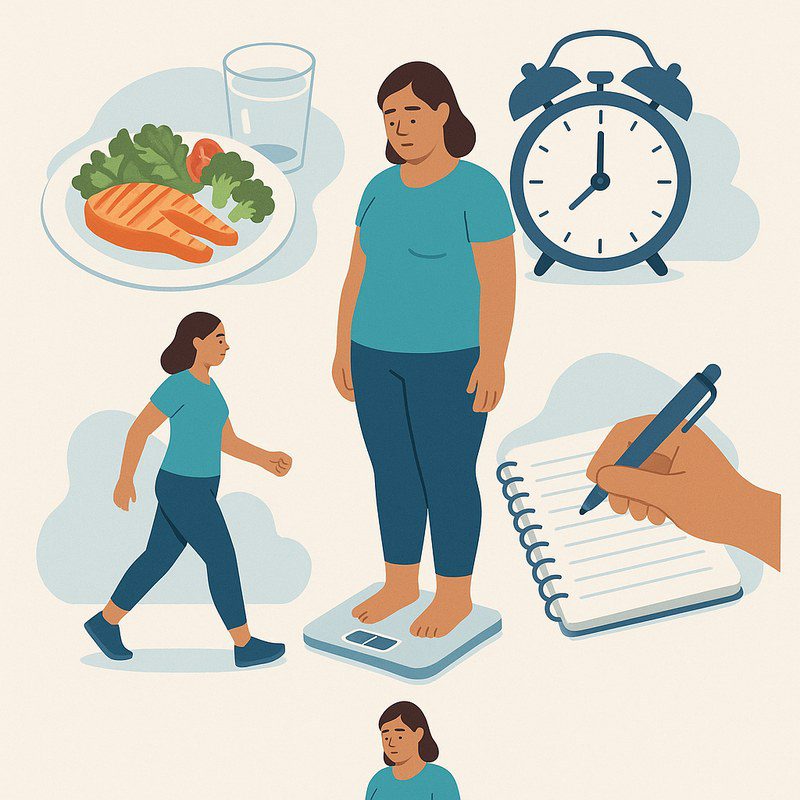
- Diet: Add more fiber-rich vegetables and lean protein. Use smaller plates and eat slowly to notice fullness.
- Exercise: Mix aerobic activities like walking with strength training twice a week. Try short bursts of higher intensity if well tolerated.
- Sleep: Set a consistent bedtime, avoid screens 30 minutes before sleep, and create a relaxing routine.
- Stress: Practice daily relaxation techniques. Even 5 minutes of deep breathing can help.
- Monitor Progress: Keep a simple journal of meals, activity, sleep, and mood to spot patterns.
Learn more about healthy lifestyle habits at Umedoc’s blog.
When to Consult a Clinician
If your weight loss stalls for several months or you experience concerning symptoms like fatigue, mood changes, or difficulty sleeping, consult a healthcare provider. They can evaluate medical causes and discuss options, including medications like GLP-1 agonists if appropriate.
Disclaimer
This content is informational and not medical advice. Consult a licensed clinician.
References
- NIDDK: Healthy Eating & Physical Activity
- Sleep Foundation: Weight Loss and Sleep
- Stress and Obesity: Mechanisms and Management
- FDA: GLP-1 Receptor Agonists Information
Keep it simple. Start with one small step. Choose whole foods more often. Move your body each day. Sleep at a regular time. Drink enough water. Talk with your doctor if you need help.
About Umedoc Health Blog
At Umedoc, we’re committed to providing updated, accurate, and accessible health information to empower your wellness decisions. For more tips, health updates, and medical guidance, subscribe or bookmark our blog today.
For more tips, health updates, and medical guidance, subscribe or bookmark our blog today.

This article reviewed by Dr. Jim Liu, MD.
There’s nothing more important than our good health – that’s our principal capital asset.
#medical #telehealth #umedoc #GLP1 #weightloss