 Español
  English

Daily Tracking Habits to Support Weight Loss Success
The Challenge of Losing Weight
Many adults find losing weight hard despite good intentions. Weight loss depends on many factors such as what you eat, how active you are, how well you sleep, and your stress levels. Tracking these daily habits can help you understand patterns and make better choices.
Why Daily Tracking Matters
Without tracking, it’s easy to overlook small habits that add up. For example, extra snacks or missed workouts can slow progress. Daily tracking encourages awareness and accountability, which research shows can improve weight loss outcomes.
Common Causes of Weight Gain or Stalled Loss
- Unbalanced Diet: Eating high-calorie processed foods or sugary drinks.
- Inconsistent Exercise: Not meeting recommended physical activity guidelines.
- Poor Sleep Quality: Less than 7 hours of sleep disrupts hunger hormones.
- High Stress Levels: Stress can lead to emotional eating or cravings.
A Practical Daily Tracking Plan
- Food Log: Record meals and snacks to monitor calorie intake and nutrition quality.
- Exercise Tracker: Note type, duration, and intensity of physical activity aiming for 150 minutes weekly.
- Sleep Journal: Track hours slept and quality; aim for 7–9 hours nightly.
- Stress Check-In: Rate daily stress and note coping methods like meditation or deep breathing.
Consider apps or a simple notebook to keep this information consistent. If prescribed, GLP-1 medications can support appetite control but work best alongside these habits.
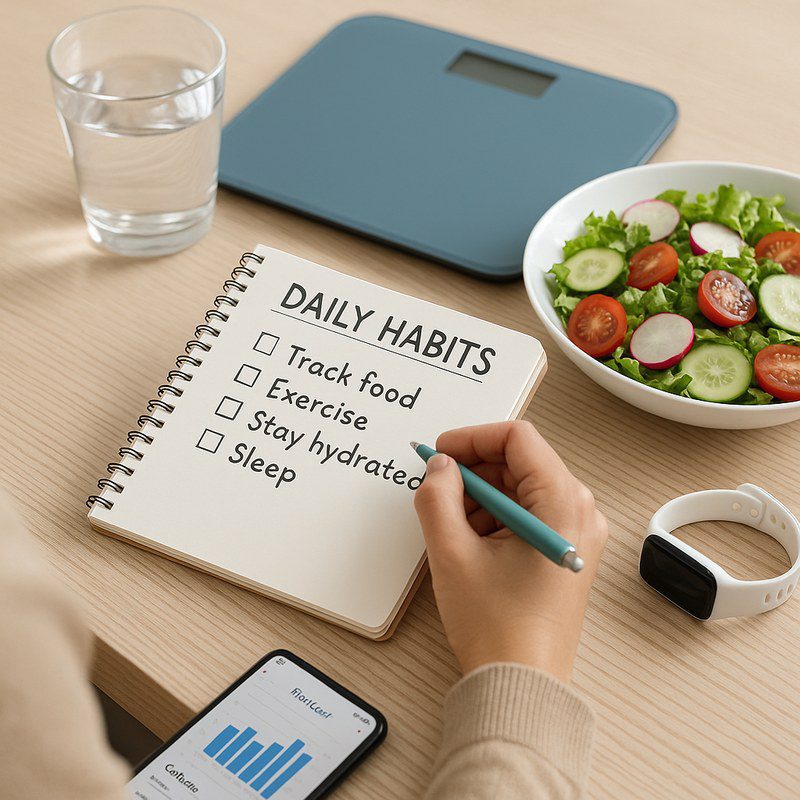
Weekly Checklist for Weight Loss Tracking
- Review your food log for hidden calories or frequent processed foods.
- Evaluate exercise frequency and try adding strength training or intervals if possible.
- Check sleep patterns for consistency and quality improvements.
- Assess stress levels and practice relaxation techniques regularly.
- Adjust goals based on your data and consult your healthcare provider as needed.
When to Consult a Clinician
If weight loss stalls despite consistent tracking and healthy habits, or if you experience symptoms like fatigue, mood changes, or unusual hunger, consult a healthcare professional. They can help rule out medical issues and guide safe use of medications such as GLP-1 receptor agonists.
Disclaimer
This content is informational and not medical advice. Consult a licensed clinician.
References
For more practical health articles, visit UMEDoc Blog.
Keep it simple. Start with one small step. Choose whole foods more often. Move your body each day. Sleep at a regular time. Drink enough water. Talk with your doctor if you need help.
Keep it simple. Start with one small step. Choose whole foods more often. Move your body each day. Sleep at a regular time. Drink enough water. Talk with your doctor if you need help.
About Umedoc Health Blog
At Umedoc, we’re committed to providing updated, accurate, and accessible health information to empower your wellness decisions. For more tips, health updates, and medical guidance, subscribe or bookmark our blog today.
For more tips, health updates, and medical guidance, subscribe or bookmark our blog today.

This article reviewed by Dr. Jim Liu, MD.
There’s nothing more important than our good health – that’s our principal capital asset.
#medical #telehealth #umedoc #GLP1 #weightloss