 English
  Español

Track Daily Habits to Support Healthy Weight Loss
Step-by-Step Plan for Daily Habit Tracking and Weight Loss
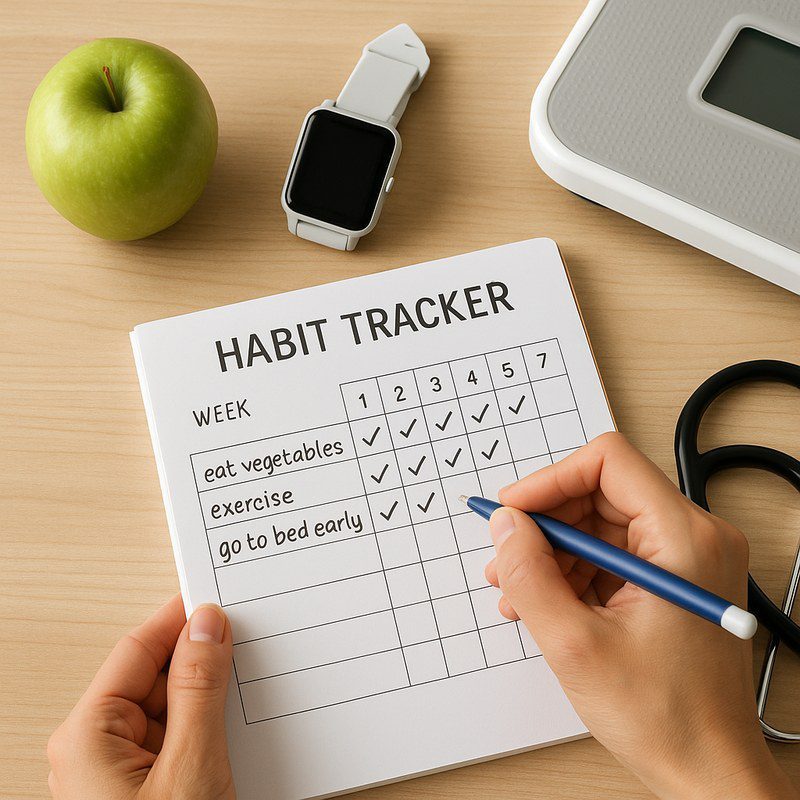
Tracking your daily habits is a powerful way to support weight loss safely and sustainably. By recording what you eat, your physical activity, sleep quality, and stress levels, you gain insight into patterns that affect your progress. Here’s a simple plan to get started:
- Choose your tracking method: Use a journal, a smartphone app, or a spreadsheet to log your daily diet, exercise, sleep hours, and stress feelings.
- Record food intake: Note what and when you eat, focusing on balanced meals with vegetables, lean proteins, and whole grains.
- Log physical activity: Write down the type, duration, and intensity of exercise. Aim for at least 150 minutes of moderate activity weekly.
- Track sleep: Note your bedtime, wake time, and sleep quality each day to identify patterns that may impact weight.
- Monitor stress: Briefly record stress levels and coping strategies, as high stress can affect appetite and metabolism.
- Review weekly: Look for trends and areas to improve, adjusting your habits gradually.
Common Mistakes in Habit Tracking
- Being inconsistent: Skipping days or forgetting to log reduces the accuracy of your insights.
- Focusing only on calories: Ignoring nutrient quality and lifestyle factors like sleep and stress can limit results.
- Setting unrealistic goals: Drastic changes can lead to frustration and burnout.
- Neglecting rest days: Overtraining without recovery can increase stress hormones, hindering weight loss.
- Ignoring emotional factors: Stress and mood affect eating and activity choices but are often overlooked.
Recovery Tips After Tracking Setbacks
- Be patient: Accept occasional missed logs as normal; resume tracking the next day without guilt.
- Simplify your system: If detailed tracking feels overwhelming, focus on one or two key habits at a time.
- Use reminders: Set alarms or notifications to prompt daily logging.
- Seek support: Share your goals with friends, family, or support groups to stay motivated.
- Consult professionals: For personalized advice, consider speaking with a healthcare provider or registered dietitian.
When to Consult a Clinician
If you experience unexplained weight changes, persistent fatigue, or difficulty managing stress and sleep despite habit tracking, consult a licensed healthcare professional. They can help identify underlying causes and tailor a safe plan for you.
Disclaimer
This content is informational and not medical advice. Consult a licensed clinician.
References
- Centers for Disease Control and Prevention: Losing Weight
- Effects of Sleep and Stress on Weight Loss: A Review
- UpToDate: Overview of Obesity in Adults
For more health insights and practical tips, visit our healthcare blog.
Keep it simple. Start with one small step. Choose whole foods more often. Move your body each day. Sleep at a regular time. Drink enough water. Talk with your doctor if you need help.
Keep it simple. Start with one small step. Choose whole foods more often. Move your body each day. Sleep at a regular time. Drink enough water. Talk with your doctor if you need help.
Keep it simple. Start with one small step. Choose whole foods more often. Move your body each day. Sleep at a regular time. Drink enough water. Talk with your doctor if you need help.
About Umedoc Health Blog
At Umedoc, we’re committed to providing updated, accurate, and accessible health information to empower your wellness decisions. For more tips, health updates, and medical guidance, subscribe or bookmark our blog today.
For more tips, health updates, and medical guidance, subscribe or bookmark our blog today.

This article reviewed by Dr. Jim Liu, MD.
There’s nothing more important than our good health – that’s our principal capital asset.
#medical #telehealth #umedoc #GLP1 #weightloss