 English
  Español

Daily Tracking: Debunking Weight Loss Myths with Science
Myth vs Fact: Daily Tracking for Weight Loss
Myth: Tracking every calorie is the only way to lose weight effectively.
Fact: While monitoring intake helps, focusing solely on calories ignores other key habits like sleep, stress, and exercise, which also influence weight.
Myth: You must track your habits perfectly every day to see progress.
Fact: Consistency over perfection matters more. Small, steady improvements in daily habits support sustainable weight loss.
What Evidence Says About Daily Habit Tracking
Scientific studies show that tracking behaviors such as diet quality, physical activity, sleep patterns, and stress levels helps people recognize patterns and make informed changes. For example, physical activity increases the release of appetite-regulating hormones like GLP-1, which can reduce hunger and support weight loss (PMCID: PMC6075637). Adequate sleep improves metabolism and hormone balance, while managing stress lowers cortisol, which is linked to fat accumulation.
Tracking multiple habits together, rather than focusing on a single metric like calories, tends to promote better long-term outcomes by encouraging a balanced approach to health.
Actionable Steps to Start Daily Tracking
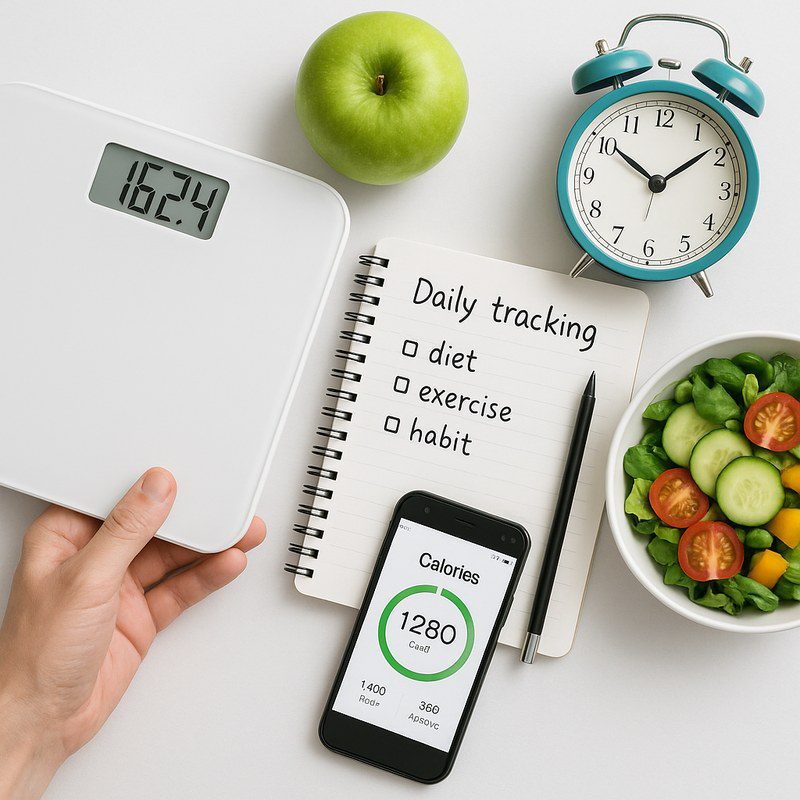
- Choose your tracking tool: Use a simple notebook, a smartphone app, or a spreadsheet to record daily habits.
- Log your meals: Write down what you eat, emphasizing balanced meals with vegetables, whole grains, and lean proteins rather than just calories.
- Record physical activity: Note the type, duration, and intensity. Aim for at least 150 minutes of moderate exercise weekly, including strength training.
- Track sleep: Record your bedtime, wake time, and sleep quality to identify patterns that may affect your weight.
- Monitor stress: Rate your daily stress and note any relaxation techniques used to help manage its impact.
- Review weekly: Look for trends and adjust habits gradually rather than expecting immediate perfection.
When to Consult a Clinician
If you experience persistent difficulty losing weight despite consistent healthy habits, or if you have underlying health conditions such as diabetes, thyroid disorders, or mental health concerns, consult a licensed healthcare professional. They can assess whether medications such as GLP-1 receptor agonists or tailored interventions are appropriate.
Disclaimer
This content is informational and not medical advice. Consult a licensed clinician.
References
- Physical activity and appetite regulation: PMC6075637
- Sleep Foundation: Weight Loss and Sleep
- American Psychological Association: Stress and Your Health
- Explore more health topics on UmeDoc Blog
Keep it simple. Start with one small step. Choose whole foods more often. Move your body each day. Sleep at a regular time. Drink enough water. Talk with your doctor if you need help.
Keep it simple. Start with one small step. Choose whole foods more often. Move your body each day. Sleep at a regular time. Drink enough water. Talk with your doctor if you need help.
Keep it simple. Start with one small step. Choose whole foods more often. Move your body each day. Sleep at a regular time. Drink enough water. Talk with your doctor if you need help.
Keep it simple. Start with one small step. Choose whole foods more often. Move your body each day. Sleep at a regular time. Drink enough water. Talk with your doctor if you need help.
About Umedoc Health Blog
At Umedoc, we’re committed to providing updated, accurate, and accessible health information to empower your wellness decisions. For more tips, health updates, and medical guidance, subscribe or bookmark our blog today.
For more tips, health updates, and medical guidance, subscribe or bookmark our blog today.

This article reviewed by Dr. Jim Liu, MD.
There’s nothing more important than our good health – that’s our principal capital asset.
#medical #telehealth #umedoc #GLP1 #weightloss