English
  Español

Your Body, Your Gym: A Beginner’s Guide to Building a Home Workout Routine
Starting a fitness journey can feel intimidating, but you don’t need an expensive gym membership or a ton of equipment to get started. Your body is the only tool you need to build a strong, healthy foundation. A well-rounded home workout routine for beginners can be just as effective as a gym-based one, focusing on fundamental movements that build strength, improve cardiovascular health, and boost your metabolism. The key is to start slow, prioritize proper form, and build a consistent routine that you can stick with for the long haul.
This guide (updated for 2025) will help you create a simple, effective, and balanced home workout routine using only your bodyweight.
The Blueprint: What Makes a Balanced Routine?
According to the American College of Sports Medicine (ACSM), a balanced fitness routine for beginners should include:
- Cardiovascular Exercise: At least 150 minutes of moderate-intensity cardio per week (e.g., brisk walking, cycling, dancing).
- Strength Training: Exercises for all major muscle groups at least two times per week.
A home workout routine makes it easy to combine both.
The “Start Low and Slow” Approach:
- Frequency: Start with just 2-3 workouts per week on non-consecutive days.
- Duration: Begin with 20-30 minutes, including a warm-up and cool-down.
- Intensity: Focus on proper form and controlled movements rather than speed or high repetitions.
The Workout: A Full-Body Routine for Beginners
This routine targets all major muscle groups and includes both strength and cardio elements. Perform each exercise for the specified repetitions (reps) or duration, then move to the next.
Warm-Up (5 minutes):
- Jumping Jacks: 30 seconds
- Arm Circles (forward/backward): 30 seconds
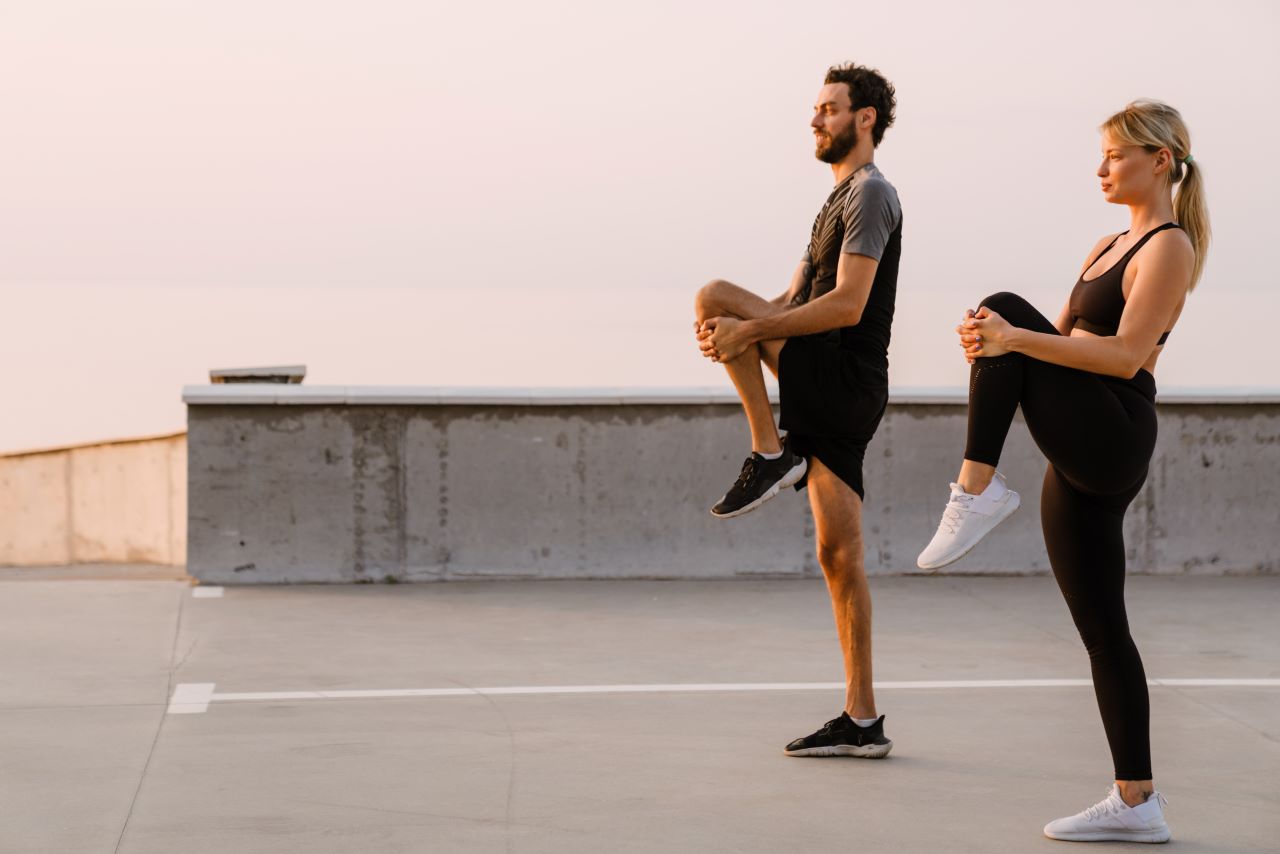
- High Knees (in place): 30 seconds
- Leg Swings (side-to-side): 30 seconds each side
- Torso Twists: 30 seconds
Workout Circuit (Repeat 2-3 times with a 1-minute rest between rounds):
- Squats: 10-15 reps (targets glutes, quads, and hamstrings)
- Push-Ups: 5-10 reps (can be done on your knees) (targets chest, shoulders, and triceps)
- Plank: 20-30 seconds (targets core)
- Lunges: 8-10 reps per leg (targets glutes, quads, and hamstrings)
- Glute Bridge: 10-15 reps (targets glutes and hamstrings)
- Bicycle Crunches: 20 reps total (targets obliques and abs)
Cool-Down (5 minutes):
Triceps Stretch
Hold each of these stretches for 30 seconds:
Quad Stretch
Hamstring Stretch
Calf Stretch
Chest Stretch
Tips for Success and Sticking with It
- Listen to Your Body: It’s normal to feel some muscle soreness, but if you feel pain, stop and rest. You may be pushing too hard or using incorrect form.
- Progress Gradually: As you get stronger, you can increase the number of repetitions, sets, or the duration of your circuit.
- Find Your “Why”: Set a clear, personal goal. Is it to feel more energetic? To feel stronger? To have more stamina for your hobbies? Let that “why” be your motivation.
- Schedule It: Treat your workout like an important appointment. Put it on your calendar and commit to it.
- Stay Hydrated: Drink plenty of water before, during, and after your workout.
A 2025 review in the Journal of Sports Medicine reaffirmed that consistency with a simple bodyweight routine is more impactful for long-term health than sporadic, high-intensity workouts.
Download: Your Body, Your Gym – A Beginner’s Guide to Building a Home Workout Routine.pdf
Conclusions and Key Takeaways
- You don’t need a gym or expensive equipment to build a strong and healthy body.
- A balanced home workout routine for beginners should combine strength training for all major muscle groups with cardiovascular exercise.
- The key to success is to start with a simple routine, prioritize proper form, and gradually increase intensity as you get stronger.
- Consistency, listening to your body, and having a clear goal are the most important factors for making your home workout routine a lasting habit.
Trusted References
- American College of Sports Medicine (ACSM). www.acsm.org (For exercise science and recommendations.)
- Mayo Clinic. www.mayoclinic.org (Search for “fitness program” and “strength training.”)
- National Institutes of Health (NIH). www.nih.gov (For general health and fitness guidelines.)
- Journal of Sports Medicine. (Refer to recent research on beginner fitness programs.)
About Umedoc Health Blog
At Umedoc, we’re committed to providing updated, accurate, and accessible health information to empower your wellness decisions. For more tips, health updates, and medical guidance, subscribe or bookmark our blog today.

This article reviewed by Dr. Jim Liu, MD.
There’s nothing more important than our good health – that’s our principal capital asset.
#medical #telehealth #umedoc #ecnoglutide #GLP #weight loss #Wegovy #diet