English
  Español

The Mediterranean Diet: A Timeless Blueprint for Healthy Eating
When it comes to healthy eating, the term “diet” often implies temporary restriction and sacrifice. The Mediterranean Diet, however, is a refreshing and timeless alternative. It’s not a strict, calorie-counting regimen but rather a delicious, sustainable lifestyle inspired by the traditional eating patterns of countries bordering the Mediterranean Sea. Rich in fruits, vegetables, whole grains, and healthy fats, this eating style is celebrated by nutritionists and cardiologists alike for its proven ability to promote weight management, improve heart health, and reduce the risk of numerous chronic diseases.
This guide (updated for 2025) will serve as your blueprint for the Mediterranean Diet, outlining its core principles, exploring its key health benefits, and providing simple steps to make it a part of your daily life.
What is the Mediterranean Diet?
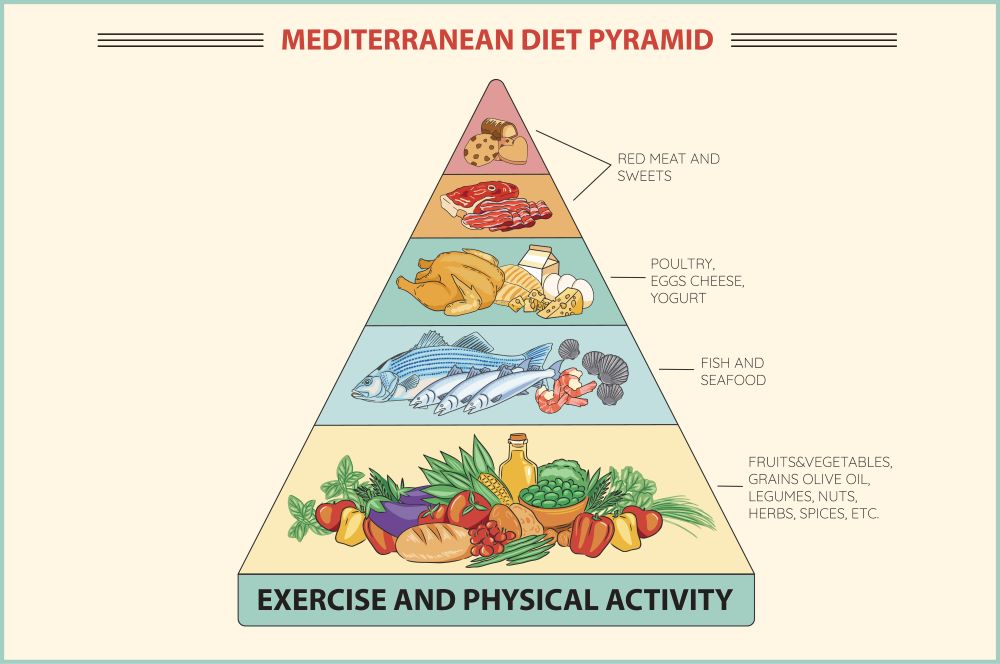
The Mediterranean Diet is defined by a few core principles rather than a rigid set of rules. It is characterized by:
- Primary Focus on Plant-Based Foods: The foundation of every meal is an abundance of fruits, vegetables, whole grains, legumes, nuts, and seeds.
- Healthy Fats are Key: Olive oil, particularly extra-virgin olive oil, is the primary source of fat.
- Lean Protein in Moderation: Fish and poultry are consumed regularly, while red meat is limited to a few times a month.
- Dairy in Moderation: Yogurt and cheese are consumed in small amounts.
- Limited Sweets and Processed Foods: Added sugars, sweets, and highly processed foods are rarely consumed.
- Red Wine in Moderation: While not a central component, red wine can be enjoyed in moderation (one glass per day for women, two for men).
The Mediterranean Diet: Your 7-Day Quick-Start Plan. Download HERE!
This plan offers a smooth and enjoyable transition to a Mediterranean-style of eating, focusing on flexibility, whole foods, and vibrant flavors rather than strict, unyielding rules. It’s designed to help you integrate healthy habits seamlessly into your daily life.
The Proven Health Benefits
The Mediterranean Diet is one of the most extensively studied eating patterns in the world. Its benefits are supported by a vast body of scientific evidence.
- Improved Cardiovascular Health: Rich in heart-healthy monounsaturated fats and antioxidants, the diet is proven to reduce the risk of heart disease and stroke.
- Sustainable Weight Management: By focusing on nutrient-dense foods that are high in fiber and healthy fats, the diet promotes satiety, helping you feel full and satisfied with fewer calories overall.
- Reduced Risk of Chronic Disease: Research has linked this eating pattern to a lower risk of Type 2 diabetes, certain cancers, and neurodegenerative diseases like Alzheimer’s.
- Anti-Inflammatory Effects: The diet is naturally anti-inflammatory, thanks to its high intake of antioxidants and omega-3 fatty acids, which helps protect the body from chronic disease.
A 2025 report from the American Heart Association hailed the Mediterranean Diet as a “gold standard” for cardiovascular health, reinforcing its status as a top choice for long-term well-being.
How to Get Started: Simple Food Swaps and Meal Ideas
Making the shift to a Mediterranean-style of eating is easier than you think. Start with small, manageable changes.
- Swap Your Fats: Use extra-virgin olive oil for cooking and in salad dressings instead of butter or other vegetable oils.
- Make Veggies the Star: Start building your meals around vegetables. For a pasta dish, bulk it up with a generous amount of vegetables and use less pasta.
- Choose Fish Over Red Meat: Aim for 2-3 servings of fatty fish (like salmon or tuna) per week. Reduce red meat to just once or twice a month.
- Snack Smart: Swap processed snacks for nuts, seeds, fresh fruit, or hummus with vegetable sticks.
- Rethink Your Grains: Replace white bread and pasta with whole-wheat bread, whole-grain pasta, brown rice, or quinoa.
Meal Ideas:
- Breakfast: Greek yogurt with berries and walnuts.
- Lunch: A large salad with chickpeas, cucumbers, tomatoes, and a grilled chicken breast.
- Dinner: Baked salmon with roasted asparagus and a side of quinoa.
Conclusions and Key Takeaways
- The Mediterranean Diet is a sustainable and enjoyable lifestyle focused on whole, plant-based foods and healthy fats.
- It is a scientifically backed approach for improving heart health, managing weight, and reducing the risk of chronic disease.
- You can start today with simple food swaps, such as choosing olive oil over butter and fish over red meat.
- This diet is a holistic blueprint for a healthier, more vibrant life, not a temporary solution.
The Mediterranean Diet: Your 7-Day Quick-Start Plan. Download HERE!
This plan offers a smooth and enjoyable transition to a Mediterranean-style of eating, focusing on flexibility, whole foods, and vibrant flavors rather than strict, unyielding rules. It’s designed to help you integrate healthy habits seamlessly into your daily life.
Trusted References
The New England Journal of Medicine. www.nejm.org (For peer-reviewed studies on the diet’s health benefits.)
American Heart Association (AHA). www.heart.org (Refer to the report on the Mediterranean Diet.)
The Mayo Clinic. www.mayoclinic.org (Search for “Mediterranean Diet” for health benefits and meal plans.)
Oldways. oldwayspt.org (A non-profit food and nutrition organization that provides resources on the Mediterranean Diet.)
About Umedoc Health Blog
At Umedoc, we’re committed to providing updated, accurate, and accessible health information to empower your wellness decisions. For more tips, health updates, and medical guidance, subscribe or bookmark our blog today.

This article reviewed by Dr. Jim Liu, MD.
There’s nothing more important than our good health – that’s our principal capital asset.
#medical #telehealth #umedoc #ecnoglutide #GLP #weight loss #Wegovy #diet