 English
  Español

Social Support: Myth vs Fact for Effective Weight Loss
Introduction: Does Social Support Really Help with Weight Loss?
Many adults struggle with weight loss and wonder if having friends or family involved truly makes a difference. This article separates myths from facts about social support and weight loss and offers practical steps backed by evidence.
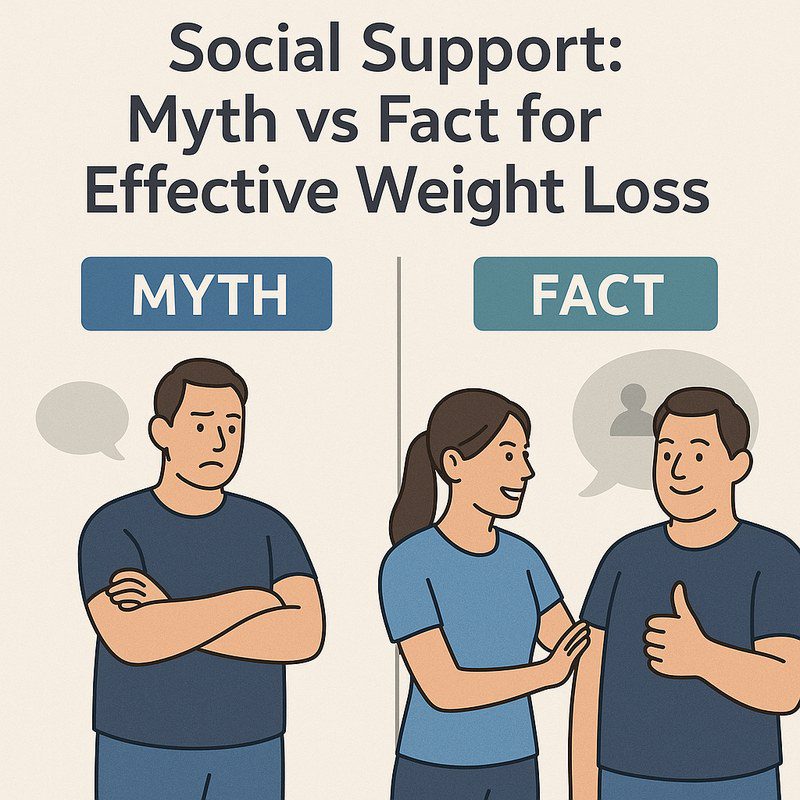
Myth vs Fact: Social Support and Weight Loss
- Myth: Weight loss is a solo journey; social support has little impact.
- Fact: Research shows that social support can improve motivation, accountability, and adherence to healthy habits.
- Myth: Only professional help counts as effective support.
- Fact: Support from friends, family, or peers can be just as beneficial and easier to maintain long-term.
What Evidence Says About Social Support and Weight Loss
Studies indicate that adults who engage in weight loss efforts with social support often experience better outcomes. According to the National Institutes of Health, group-based programs and peer encouragement help sustain diet and exercise routines. Social connections may also reduce stress, which can otherwise hinder weight loss by affecting hormones and appetite.
Additionally, incorporating social support complements other factors like diet quality, regular exercise, sufficient sleep, and stress management, all essential for healthy weight loss. Medications such as GLP-1 receptor agonists might assist some individuals but work best alongside these lifestyle habits.
Actionable Steps to Use Social Support for Weight Loss
- Join a group: Look for local or online weight loss or fitness groups to share goals and progress.
- Involve friends or family: Invite someone to walk, cook healthy meals, or attend wellness activities with you.
- Set shared goals: Create achievable targets together to stay motivated and accountable.
- Communicate openly: Share challenges and successes to build trust and encouragement.
- Combine support with good habits: Prioritize balanced diet, regular exercise, quality sleep (7-9 hours), and stress reduction techniques like meditation.
- Use technology: Apps or social media can connect you with supportive communities and track your progress.
When to Consult a Clinician
If you experience persistent difficulties with weight loss despite lifestyle changes, or if you have underlying health conditions, consult a healthcare provider. They can assess your situation and recommend safe, personalized strategies, including whether medications or other interventions might help.
Disclaimer
This content is informational and not medical advice. Consult a licensed clinician.
References
- NIH: Social Support and Weight Loss
- CDC: Losing Weight Safely
- Sleep Foundation: Weight Loss and Sleep
For more practical health tips, visit our healthcare blog.
Keep it simple. Start with one small step. Choose whole foods more often. Move your body each day. Sleep at a regular time. Drink enough water. Talk with your doctor if you need help.
Keep it simple. Start with one small step. Choose whole foods more often. Move your body each day. Sleep at a regular time. Drink enough water. Talk with your doctor if you need help.
Keep it simple. Start with one small step. Choose whole foods more often. Move your body each day. Sleep at a regular time. Drink enough water. Talk with your doctor if you need help.
Keep it simple. Start with one small step. Choose whole foods more often. Move your body each day. Sleep at a regular time. Drink enough water. Talk with your doctor if you need help.
About Umedoc Health Blog
At Umedoc, we’re committed to providing updated, accurate, and accessible health information to empower your wellness decisions. For more tips, health updates, and medical guidance, subscribe or bookmark our blog today.
For more tips, health updates, and medical guidance, subscribe or bookmark our blog today.

This article reviewed by Dr. Jim Liu, MD.
There’s nothing more important than our good health – that’s our principal capital asset.
#medical #telehealth #umedoc #GLP1 #weightloss